|
| |
| |
Alternative science |
| |
Scientific results are created from meticulous descriptions of observations, and through conclusions drawn from such observations.
There are groups in the society that want to expand the borders of science. |
| |
 Christian groups Christian groups
|
| |
A summary of the
area can be
found at The TalkOrigins Archive.
Supporters of Creationism have, in my opinion, great problems. It is not the content
of the hypothesis, but reproducible verifications of the hypothesis, that determine
the scientific level of the concept that the hypothesis deals with. |
|
|
Alternative life style |
| |
Groups claiming an alternative life style, often alternative
medicine,
criticise the
scientific
community for being confined.
I agree:
Science is confined,
science is restricted. It should be. My opinion is that this is the best protection we have against intentional and unintentional errors in questions that are vital for our health.
There are certainly many verifiable observations
that are
not yet
carried out.
New ideas and ways
of thinking
will
probably rise.
But these new views must be verified by
reproducible observations
before they can
be held as scientific. |
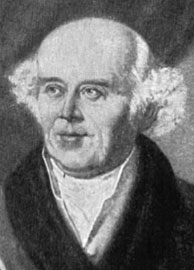 |
Samuel Hahnemann,
originator of homeopathy
(image: Wikipedia) |
| |
Verification by observations is the only method we have that, at least partially, may sieve away the flood of erroneous statements that constantly are poured over us by various interest constellations. |
|
|
Alternative medicine - Magnet therapy |
| |
Magnets are often claimed to increase human health and
decrease pain.
A Google search on "magnets" and "health" gave
6 million hits, most of
them selling magnets
for increased health.
Does is exist verified observations that support use of magnets
as health enhancers?
The year 2004 a well written article about magnet
therapy was published
in the serious journal British Medical Journal, BMJ.
A conclusion in the article was: |
| |
Our study has not entirely resolved the
extent to which the effect of
magnetic bracelets is specific or due to placebo |
Harlow et al. (2004) - BMJ 329, s.1450-1454 |
| |
In spite of this conclusion, the article is cited as support for effect
of magnet therapy among sellers of magnet products. |
|
|
Extraordinary claims demand
extraordinary evidence |
| |
The year 2006 an Editorial about magnet therapy in BMJ was published.
The citation "Extraordinary claims demand extraordinary evidence"
summarizes why the scientific society often seems to be prejudiced
against
to new revolutionizing methods in medicine.
During 2006, the Swedish "Läkartidningen" published a discussion
between Sven Nilsson and David Bergquist/Erik Wahlberg concerning
scientific arguments
behind marketing of products
for magnet therapy. |
| |
The same Sven Nilsson as above in 2008 published a report in Swedish
about
how restless legs
was influenced by pulsating electro-magnetic
fields. The article represents a clear demonstration of the function of science. |
The completed study showed that treatment using placebo and treatment using pulsating electromagnetic
fields gave identical results against restless legs, tingling and nightly calf muscle cramp. |
Nilsson (2008) - Pulserande elektromagnetiska
fält och placebo gav samma effekt, Läkartidningen 32-33, s.2167-2170.
(transl.: vetenskapsteori.se |
|
| |
| |
2025-03-19 |
|