|
 Knowledge - common experience Knowledge - common experience
under continuous revisions
|
| |
Knowledge may also be said to consist of such observations and
conclusions
that
many persons openly investigate, revise, alter and maybe agree about. This type of knowledge is an adaptation to that "eternal truth" cannot be shown to exist.
For this knowledge to be trustworthy, it is important how
it
is spread and revised: |
| |
• What type of arguments can be used?
• How can revisions be encouraged?
From the
answers
to
such questions,
something that reminds
about what we today call scientific method will probably be created. |
|
|
Knowledge dependent or
independent on experience |
| |
As discussed above, the term "knowledge" is not easy to define, and within philosophy this invites to speculation.
A question discussed since the Greek antiquity is whether "knowledge" should be based by observations or if we may reach "knowledge" using only logical reasoning, independent of observations.
Plato discussed that our observations cannot be proven to represent some kind of reality and Aristotle stressed the importance of observation together with logical reasoning (deduction). They both actually had about the same opinions.
And so it has continued through history of philosophy. |
| |
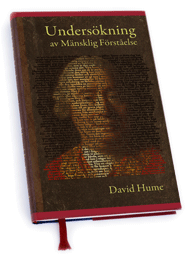
During the Enlightenment the concepts became more defined and e.g. David Hume called the two groups, from which our reasoning are built, for "matter of fact" and "relations of ideas".
Reasoning based on "matter of fact" was called probability arguments. Western philosophers today agree about that our experience about the world is ultimately based on such arguments. |
 |
|
|
Knowledge a priori and a posteriori |
| |
It is generally agreed that tautologies ("analytic arguments") represent reasoning a priori. But does arguments in addition to these ("synthetic arguments") exist that also can be said to be a priori?
That is: Does arguments a priori about our experienced reality exist? Without such arguments, the relevance of pure analytic philosophy (armchair philosophy) concerning the world can be seriously questioned.
Kant enters the scene
Without defining his use of the term "knowledge", Immanuel Kant discussed these topics in terms of "a priori" ("knowledge" that can be justified without referring to observations) and "a posteriori" ("knowledge"
that requires observations for justification). What he claimed to be a priori arguments is at this website called "absolute knowledge" |
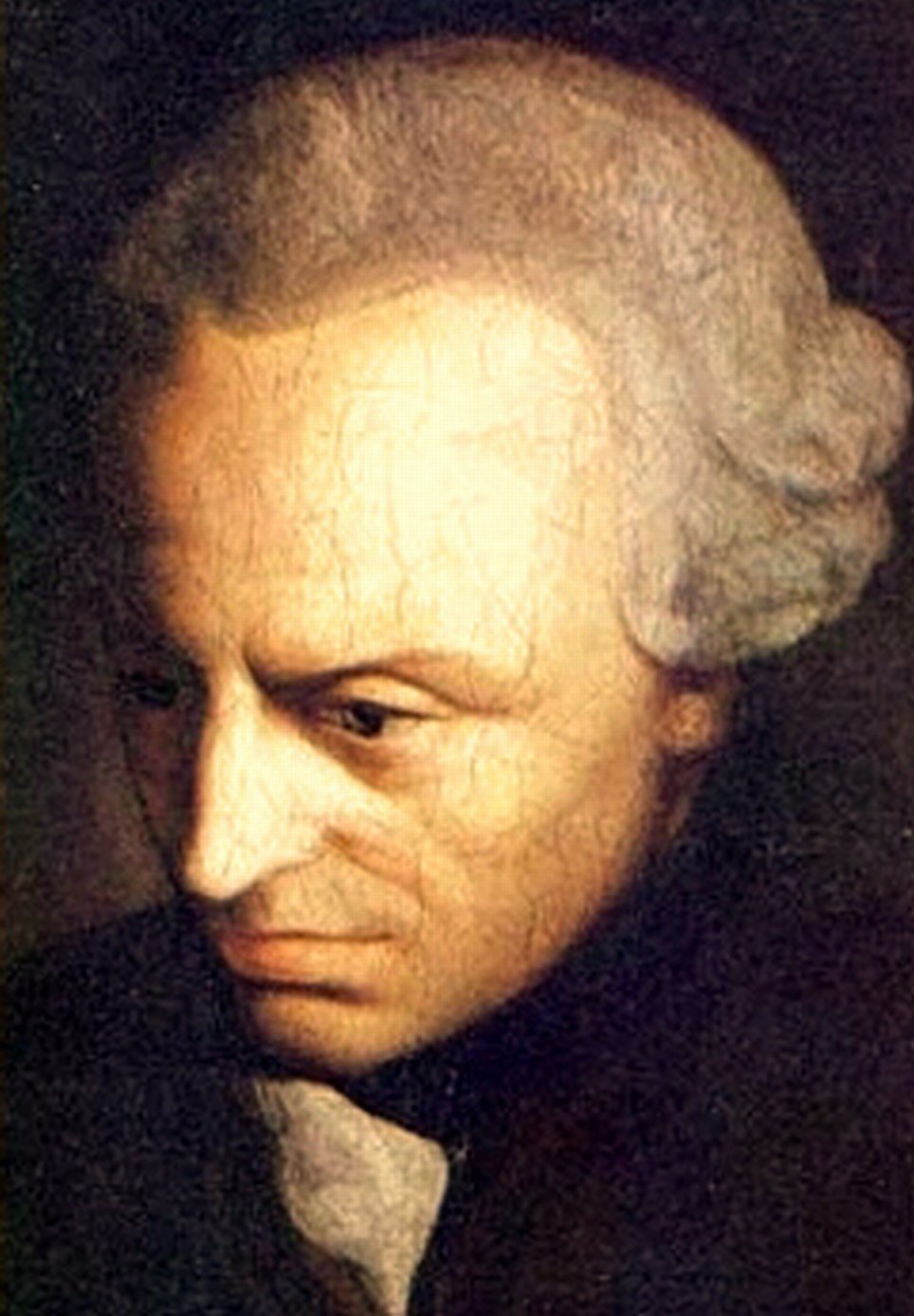 |
Immanuel Kant (public domain) |
| |
Kant wished that abstract philosophy should be justified, and with the help of diffuse definitions he claimed existence of "synthetic a priori arguments".
He hence claimed existence of statements about the world that are not ultimately based on experiences or, differently expressed, that combination of "absolute knowledge" about the world is possible.
A quick conclusion learns that in case we cannot claim existence of any "absolute knowledge" about our world, it is of course impossible to claim existence about combinations of such knowledge. Philosophes, however, dislike quick conclusions. Below three example of longer texts with a similar final conclusion:
• Boghossian P, Peacocke C - New Essays on the A Priori, Clarendon Press (2000).
• Kitcher P, "A priori", Ch. 1 in Guyer P (Ed) - Kant and Modern Philosophy, Cambridge Univ. Press (2006).
• Andersson, H - Apriorisk kunskap, en analys av definitioner, C-uppsats, Lunds Univ. (2007). |
|
|
Induction - to draw conclusions
from
observations |
| |
Definition of induction:
The process of inferring a general law
from the observation of
particular instances
Oxford English Dictionary |
Short version: Inferring from particulars to generals. |
| |
A philosophic attitude that argues for the use of induction
is called empiricism.
Induction implies that repeated similar observations create expectations of that additional similar observations under similar conditions will yield similar results, and that they therefore represent something general.
Or in everyday language: When we note something several times, we believe that it is true.
We use induction every day, possibly in every conscious moment. Every morning, we expect
the
world to look
similar to what is was in the evening before - induction! We drink a glass of water and expect it to quench our thirst - induction! We drop a heavy stone and expect it to fall - induction!
We believe that we should look approximately the same and that the floor remains. Induction is the base for all our experience.
Another example of induction is that we believe that every human someday, sooner or later, will die. |
| |
Neither induction nor any other method
will give rise to "absolute knowledge". Regardless of
how
many observations we have performed
that
support a hypothesis, we cannot be certain about that the hypothesis
is "absolutely true". This was discussed
e.g. by Sextus Empiricus about 200 AD and by Isaac Newton 1730: |
It is easy, I think, to reject the method of induction.
For since by way of it they want to make universals convincing on the basis of particulars,
they will do this
by surveying either all the particulars, or some of them. But
- if some, the induction will be infirm, it being possible that some of the particulars omitted in the
induction should be contrary to the universal,
and
- if all, they will labour at an impossible task,
since the particulars are infinite and indeterminate.
Thus in either case it results, I think, that induction totters. |
Annas (Ed.) (2007) - Outlines of Scepticism,
Book 2, part XV
|
As Sextus Empiricus was an advocate of empiricism, it is likely that the term "induction totters" for him implied a rejection of that induction could give rise to "absolute knowledge". |
| |
And although the arguing from Experiments and Observations by Induction be no Demonstration of general Conclusions; yet it is the best way of arguing which the Nature of Things admits of, and may be looked upon as so much the stronger, by how much the Induction is more general. |
Isaac Newton (1730) - Opticks, 4Ed, p.380 |
|
| |
The strength of scientific methodology |
| |
An illustration of the problem with induction was given by Bertrand Russell: |
There was once upon a time a census officer who had to record
the
names
of all householders in a certain Welsh village.
The first that he
questioned
was called William Williams;
so were the second, third,
fourth, ...
At last he said to
himself: "This is tedious; evidently they are all called
William Williams.
I shall put them down so
and take a holiday."
But he was wrong; there was just one whose name was John Jones. This
shows that we may go astray
if we trust too implicitly in induction by simple enumeration. |
Russell (1945) - History of Western
Philosophy,
in the section about
Francis Bacon |
 |
| |
Scientific methodology decreases
the insecurity
inherent in
induction. A scientific treatment of Russell´s illustration may look like this: |
• The census officer publishes that all were named William Williams and how he reached this conclusion.
• Somebody reads this and notes that the work is not complete. She checks the church books and finds one John Jones. She reports this, how she arrived to this result and also describes the earlier work by the census officer.
• A person in the village reads this second report and knows that the neighbour, a recent immigrant, is called Sven Svensson. This is reported as a "letter" to a journal. This "letter" also contains references to the two previous reports. |
In this manner will, by and by, through induction, verification, falsification and publication, a more refined description of the householders in the village be developed. |
|
|
Deduction - to infer conclusions
by logical reasoning |
| |
Definition of deduction:
The process of drawing a conclusion from a principle
already known
or assumed
Oxford English Dictionary |
Short version: Inferring from generals to particulars. |
| |
A philosophic attitude that argues for the use of deduction is called rationalism. It is popular within philosophy and is sometimes called "armchair philosophy"
A problem with rationalism is that strict deduction, without
references
to
observations, cannot give anything of interest regarding our perceived reality.
Or differently expressed: Arguments that are synthetic a priori have not been demonstrated to exist. This was
discussed in detail by David Hume already at the eighteenth
century.
A form of rationalism that is possible to apply while describing our perceived reality therefore
must include
empiricism. |
| |
A more illuminating definition about deductive arguments concerning our perceived world accordingly read:
Deductive arguments concerning our perceived reality create relations between conclusions (ultimately based on perceptions) and perceptions, or between conclusions (ultimately based on perceptions) and conclusions (ultimately based on perceptions). |
The link to the definition in Oxford English Dictionary is provided by that "a principle
known or assumed" is ultimately based on perceptions.
The logical impossibility of strict rationalism was also discussed
by Bertrand Russell:
German philosophers, from Kant to Hegel, had not assimilated Hume's arguments.
I say this deliberately, in spite of the belief which many philosophers share
with Kant, that his "Critique of Pure Reason" answered Hume.
In fact, these philosophers, at least Kant and Hegel, represent
a pre-Humian type of rationalism, and can be refuted by Humian arguments. |
Russell (1945) - History of Western
Philosophy",
in section about
David Hume |
|
|
Skepticism - we cannot know anything |
| |
Skepticism (or Scepticism) has been expressed
since
the antique Greece.
When induction cannot result in "absolute knowledge" and still is the only method of acquiring knowledge about the world, an ancient base for general dismissal of knowledge is created.
The word skepticism comes from the Greek word for "to consider". It implies
that an
issue
should be investigated before arguing about it.
Skepticism, like all other philosophies, exists in varying degrees. When drawn to its extremes it is called Pyrrhonism where it is claimed that we should not trust anything.
The arguments of Pyrrhonism hence rest on an experienced erroneous foundation. If we, for instance, cannot trust that we are thirsty we have no reason to drink and nature will claim its rights.
Another problem with Pyrrhonism is that supposedly skeptic statements like "Knowledge does not exist", "We can never
know anything" or "All is relative"
represent contradictions as they, in spite of their
content,
claim to represent some type of knowledge. A Pyrrhonist can hence never claim his or hers opinion. |
| |
Mitigated skepticism |
Academic or mitigated skepticism includes that some arguments are more probable than other. This later skepticism is strongly connected with scientific methodology and rejects dogmatic and false deductive reasoning.
David Hume is considered as a leading mitigated skeptic, He wrote about Pyrrhonism: |
These principles may flourish and triumph
in the schools where it is, indeed, difficult if not impossible
to refute them.
But as soon as they leave the shade, and
by the presence of the real objects, which actuate our
passions and sentiments, are put in opposition to the more
powerful principles of our nature, they vanish like smoke,
and leave the most determined skeptic in the same condition
as other mortals. |
Hume (1777) - Enquiry p.159 |
|
|
|
Science is not the same as "knowledge": |
| |
The term "knowledge" may imply various concepts
as discussed above.
Science consists of results from an activity, a method of work, during which
observations or conclusions from observations are
reported
in a manner that admits of examination.
This adds to the reliability of a scientific proposition, compared to a proposition that is not based on observations.
Science is hence a concept quite different from "knowledge". The two terms are sometimes confused, probably because many scientific publications are regarded as credible descriptions of our perceived world. |
| |
Criticism of science using arguments that rightly should be concerned with the concept "knowledge" is, according to my opinion, either deliberately erroneous or a testimony of unawareness about epistemology.
I view the scientific method as a successful attempt to solve our obstacles with the concept "absolute knowledge". |
|
|
We use induction, deduction and skeptic arguments |
| |
As stated above, we cannot prove presence, or
absence
of anything using logically strict arguments.
We cannot
logically prove the presence or absence of a
stone, nor
the existence,
or non-existence, of "absolute knowledge". |
We use induction
But we do not seriously believe that the world will change
during
the time it takes to twinkle. We dare to take a step
and
put down
our foot, without fear that the ground have disappeared.
Hence we apply induction in our lives, probably during every conscious
moment.
We do that in spite of that
we
know that "absolute knowledge" about the world
cannot
be proven using strict philosophical arguments. |
| |
We use deduction
During every conscious
moment we probably also create relations between
observations.
Similarities and dissimilarities are judged by our thoughts.
Does the food smell as it should? Do I have the strength to
move the heavy stone? Do I want to talk to this angry person?
We are mitigated Skeptics
If we reflect, we may sense that we are not entirely certain in our beliefs.
Some are more certain, others are less. We believe that the world will exist tomorrow, but we are maybe less certain about that all types of meat are only nutritious.
We have to live with our "truths", even when
we cannot prove them to represent "absolute knowledge". |
|
|
Summary of more than 2000 years of epistemology |
|
| |
• Do we know anything?
-
Probably.
• Can we prove that we know anything?
-
No, not if the term "know" is taken to mean "absolute knowledge" (but this does not imply that we do not know anything).
• Can we live with that we cannot prove that that we know anything?
-
Obviously. |
| |
After having written this summary, I became aware of that David Hume formulated the last point in a far more poetic manner: |
...who must act and reason and believe; though they are not able, by their most diligent enquiry, to satisfy themselves concerning the foundation of these operations, or to remove the objections, which may be raised against them. |
Hume (1777) - Enquiry, p.160 |
|
| |
| |
|